
If you’ve ever avoided a difficult conversation, skipped a social event, or pushed away an uncomfortable feeling just to get a moment of peace, you’re not alone.
Avoidance feels like relief in the moment — but understanding the anxiety cycle can reveal why that relief rarely lasts.
What Is the Anxiety Cycle?
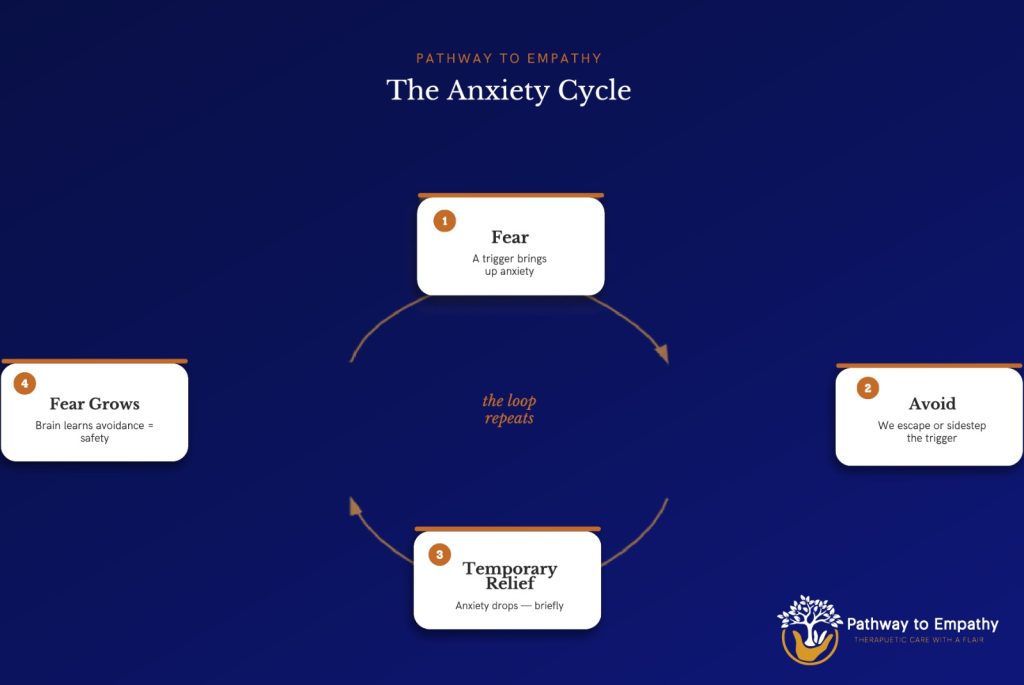
The anxiety cycle follows a predictable pattern:
Fear → Avoidance → Temporary Relief → The Brain Learns “Avoiding Kept Me Safe” → Fear Grows
Each time we avoid something that scares us, we feel a quick sense of relief. But that relief teaches the brain a dangerous lesson — that the only reason we’re safe is because we avoided the situation.
Over time, this reinforces the fear instead of resolving it, and the anxiety can become stronger and more persistent.
What Avoidance Looks Like in Everyday Life
Avoidance isn’t always obvious. It can show up in everyday situations, such as:
- Avoiding difficult conversations with a partner, friend, or coworker
- Skipping social situations, even ones you’d normally enjoy
- Pushing away uncomfortable feelings
These small, everyday choices can quietly build into a bigger pattern that limits work, relationships, and personal growth.
How Therapy Helps Break the Cycle
One of the most effective approaches to anxiety treatment involves helping people face their fears gradually, in small and manageable ways, rather than all at once.
This process — often used in evidence-based therapies — helps rebuild confidence step by step and interrupts the avoidance-fear loop.
The goal of therapy isn’t to eliminate anxiety completely. Anxiety is a normal human emotion.
The real goal is building the capacity to say:
“I can handle anxiety when it appears.”
Rather than avoiding anything that might trigger it.
You Are Capable of Learning New Responses
Breaking an avoidance pattern takes practice, patience, and often professional support — but it is absolutely possible.
With the right guidance, you can learn new ways of responding to fear that don’t rely on avoidance and build lasting confidence in the process.
If anxiety and avoidance patterns are affecting your daily life, professional support can help you understand the cycle and start building healthier responses.
Pathway to Empathy — Therapeutic Care with a Flair
Houston, TX
Northwest Fwy #311, Houston, TX
info@pathway2empathy.com
pathway2empathy.com